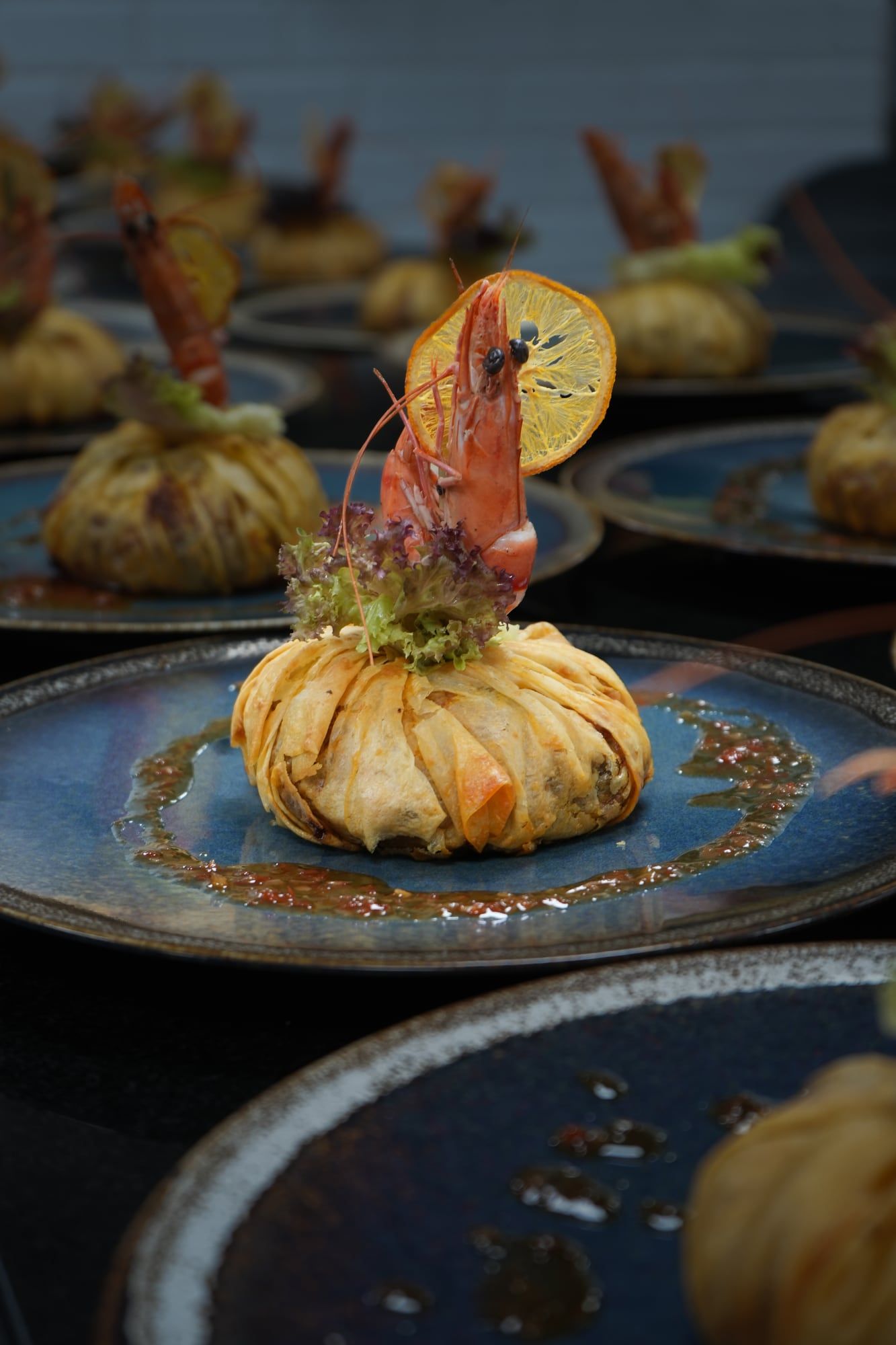
People eat with their eyes first. Before they book a table on Google Maps, open your menu on Glovo or stop on your Instagram post, they have already decided from a single photo whether your food looks worth it.
Good food photography is not about making a dish look like something it is not. It is about showing it as it really is, at its best, the moment it leaves the kitchen. Here is how we approach it for restaurants in Marrakech.
Where your food photos are seen
Each platform has its own format, so plan for all of them from one shoot:
| Where | Format | What it needs |
|---|---|---|
| Google Business Profile | JPG or PNG, 720 × 720 px or more | Real dishes, the dining room and the terrace |
| Glovo | 500 × 500 to 4000 × 4000 px, under 10 MB | One clear dish on a clean background |
| Instagram feed | 4:5, 1080 × 1350 px | Atmosphere, styling, colour |
| Instagram Stories and Reels | 9:16, 1080 × 1920 px | Movement: pouring, cutting, serving |
Glovo’s partner guidance asks for a clean, preferably plain background, good contrast and the real dish customers receive. Requirements can vary by country and account, so check your partner dashboard before exporting.
Light: the most important ingredient
- Use soft daylight. A window with indirect light beats any ceiling lamp. In Marrakech the sun is strong, so diffuse direct light with a sheer curtain.
- Light from the side or slightly behind. Side light shows texture; backlight makes sauces, glasses and steam glow.
- Fill the shadows. A white card or reflector opposite the window keeps the dark side of the plate from going black.
- Never mix light sources. Daylight plus warm bulbs gives orange and blue patches that are hard to correct.
- For consistency, go professional. A large softbox gives the same light at 10 a.m. and 9 p.m., so your whole menu looks like one set.
The right angle for each dish
- From above: flat or round dishes such as salads, couscous, mezze and the top of an open tagine.
- At 45 degrees: plated mains, burgers, desserts and anything with layers or height.
- At eye level: tall drinks, stacked pastries and dramatic steam.
- Close-ups: the crunch of pastilla, the grain of couscous, a glaze or a sauce.
For delivery menus, choose the clearest “this is what you will receive” angle over the most artistic one.
Photographing Moroccan dishes
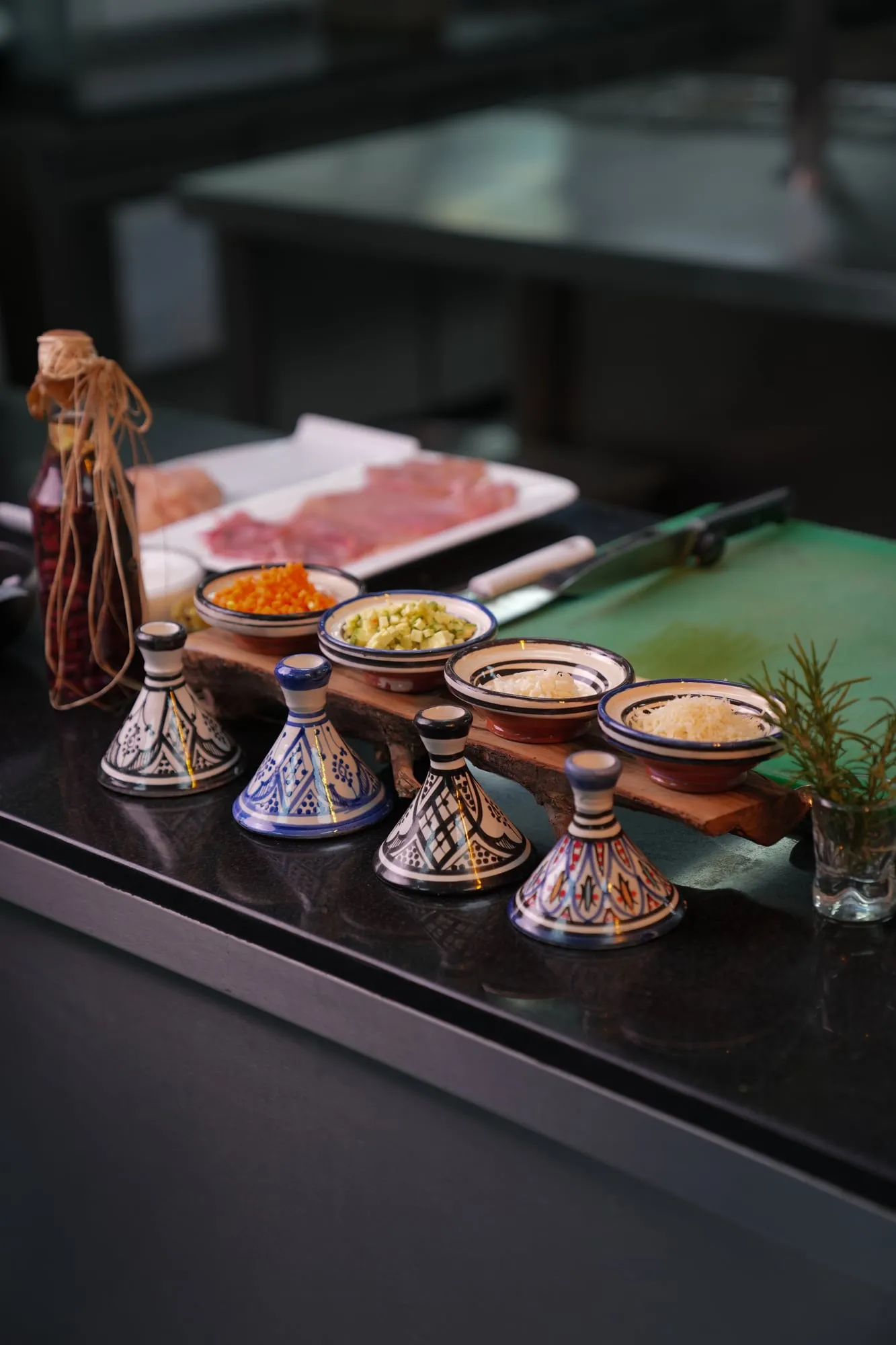
Tagine. Show it closed once for the ritual, then open, at 45 degrees, so the sauce, preserved lemon and olives are visible. Wipe the rim before you shoot.
Couscous. Shoot from above or slightly elevated, soon after plating so the grains stay fluffy, in a dish large enough to leave a clean margin around the mound.
Pastilla. Photograph it whole first, then cut, with side light to reveal the crisp layers. Keep the cinnamon and sugar pattern, but do not hide the pastry under it.
Mint tea. The pour is the shot: a fast shutter speed, a dark background and backlight that makes the tea glow amber in the glass.
Styling without lying
- Shoot the dish the second it is plated, before herbs wilt, sauces dull and steam disappears.
- Keep props simple: a ceramic plate, wood, a linen napkin, a glass of tea. The dish stays the star.
- Show the real portion. An oversized plate in the photo becomes a disappointed customer and a bad review.
- Clean everything: drips on the rim, crumbs, fingerprints on glasses.
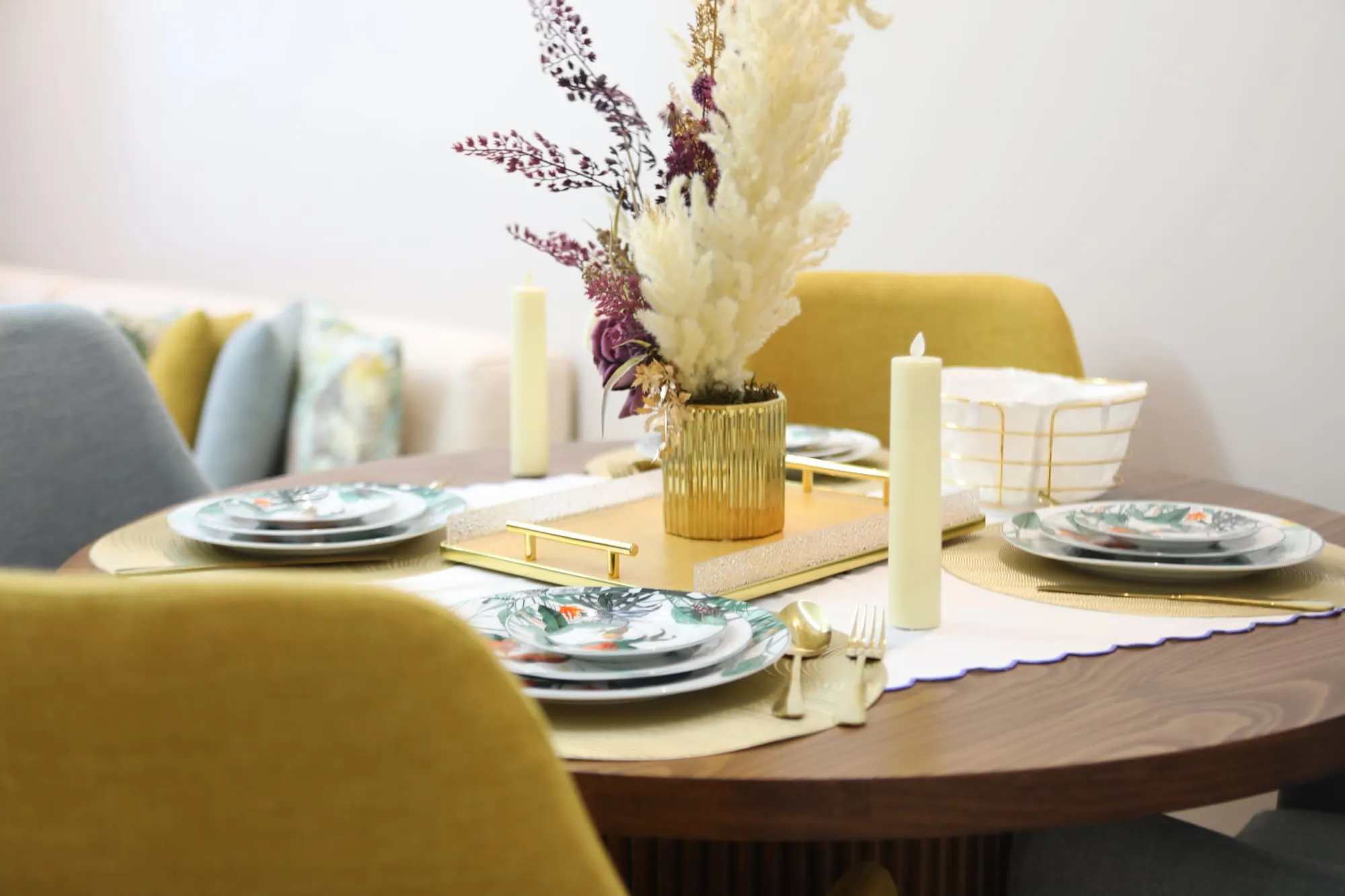
Do not forget the place
People choose a restaurant for the atmosphere as much as the food. Make sure you also have:
- the dining room, set and lit for service;
- the terrace or garden at golden hour;
- the bar, the open kitchen or the chef at work;
- one or two shots with guests, with their consent.
Plan the shoot
- Make a shot list of your best-sellers and signature dishes.
- Shoot before service, when the kitchen can plate each dish fresh, one at a time.
- Export the right crops for each platform from the same files: square for menus, 4:5 for the feed, 9:16 for reels.
- Update seasonally, when the menu changes, so photos always match what you serve.
Frequently asked questions
How many dishes can be photographed in one session? It depends on the styling and the number of set-ups. We plan the shot list with you before the session so your kitchen knows exactly what to prepare and when.
Can we use phone photos? For daily stories, yes. For your menu, Google profile and website, professional photos make every dish look consistent, sharp and appetising, and they last for months.
Do you also make videos? Yes. Short vertical reels of plating, pouring and serving are often what performs best on Instagram.
Want your dishes to look as good as they taste? See our restaurant and food photography, read our hotel photography guide, or ask us for a free quote.