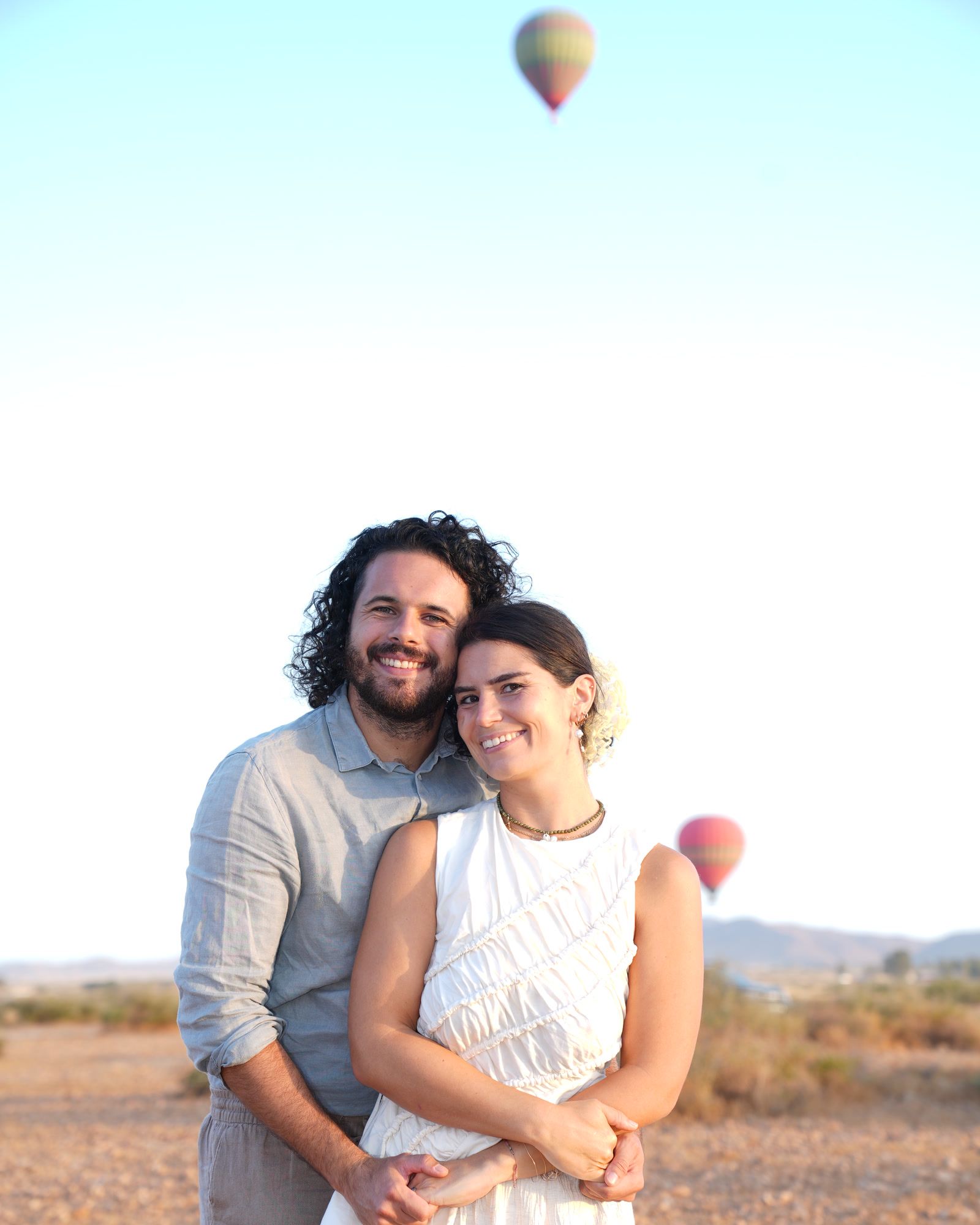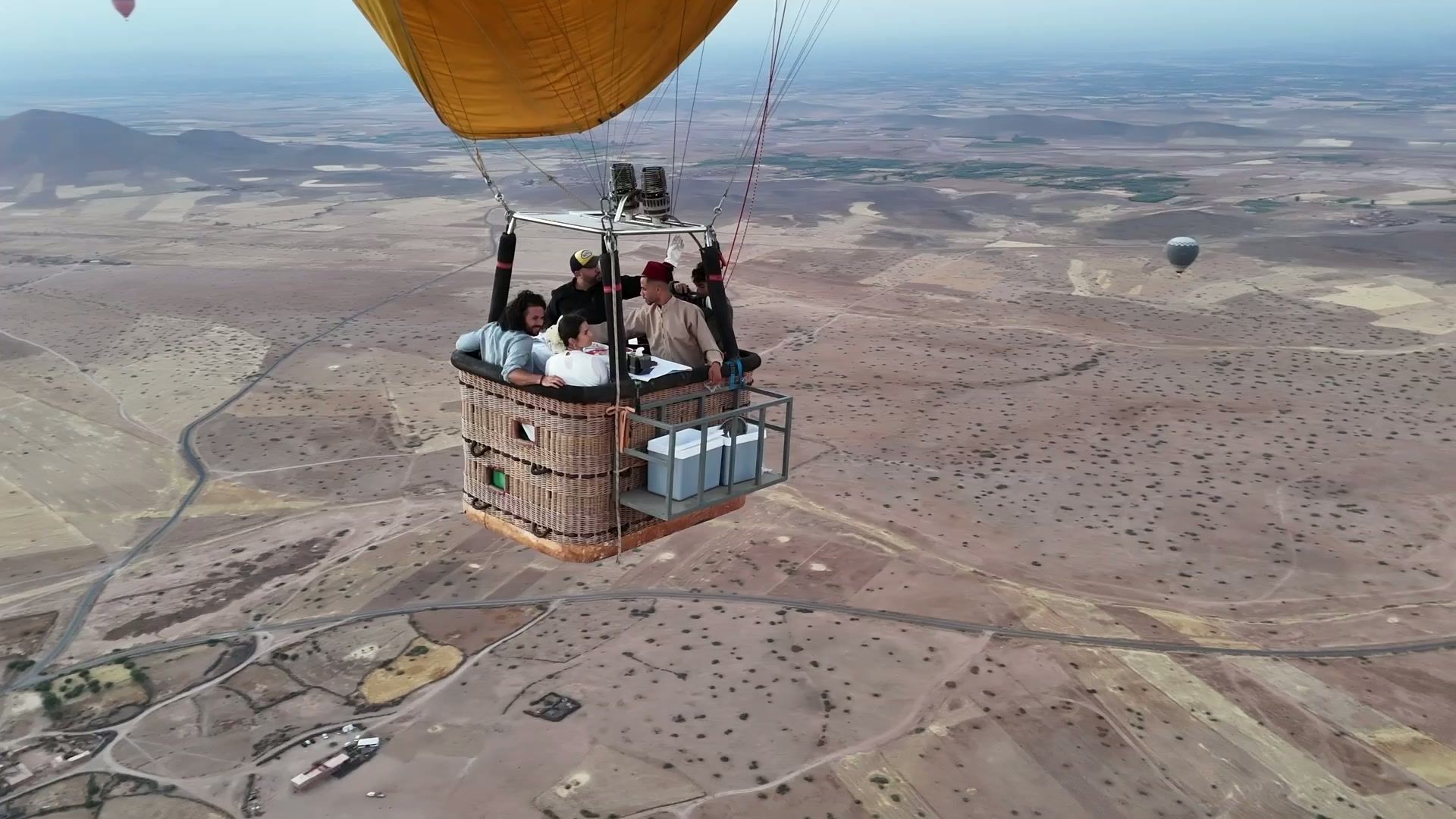
Aerial shots of riads, desert camps and the Atlas Mountains look incredible, so many visitors pack a drone for Morocco. It is one of the most common travel mistakes we see: the drone rarely makes it past the airport.
Here is how the rules work in practice, what happens at customs, and how aerial footage is done legally for weddings, hotels, villas and brand shoots.
This guide reflects the rules as we understand them in October 2026. It is not legal advice: always confirm with the Moroccan authorities before you travel.
The short answer
- As a tourist, do not bring a drone to Morocco. Moroccan customs does not allow travellers to bring drones in for personal use, and drones found in luggage are confiscated.
- Small drones are not an exception. There is no confirmed exemption for drones under 250 g. Treat a mini drone exactly like a large one.
- Flying is only legal with prior authorisation from the Moroccan authorities, for a specific drone, place and date.
- Even with authorisation, some areas are always off-limits: airports, royal palaces, military and security sites, and crowds.
What happens at the airport
Luggage is X-rayed on arrival at Moroccan airports, including Marrakech Menara. According to Moroccan customs, drones cannot be brought in under temporary admission, the regime that normally covers personal items you take home again, and an undeclared drone is confiscated, with a fine.
Some travellers report that their drone was held and given back when they left the country. Do not count on it: customs makes no promise to store or return it. If you have already packed one, declare it on arrival rather than hiding it.
Who can fly a drone legally in Morocco
Drone flights need prior authorisation, issued for a particular aircraft, operator, location and date. A general business registration, a hotel’s permission or a drone licence from another country does not replace it.
- Moroccan companies can apply for permission to fly for a specific shoot. The request takes time and is not always granted.
- Foreign film crews first need a shooting authorisation from the Centre Cinématographique Marocain (CCM), the national film body. The drone must be declared in that application, and the import and flight still need their own clearance. In practice, foreign productions go through a local production company.
- No official processing time is published. Count in weeks, not days, and never plan aerial footage as a last-minute add-on.
Where you can never fly
Even an authorised flight stays away from:
- airports and their approach paths: Marrakech Menara airport is only a few kilometres from the medina and Gueliz;
- royal palaces, government buildings, and military, police and security sites;
- crowds and busy streets, including much of the medina;
- borders and sensitive infrastructure.
An authorisation lists the places where you may fly. It never covers “anywhere in Marrakech”.
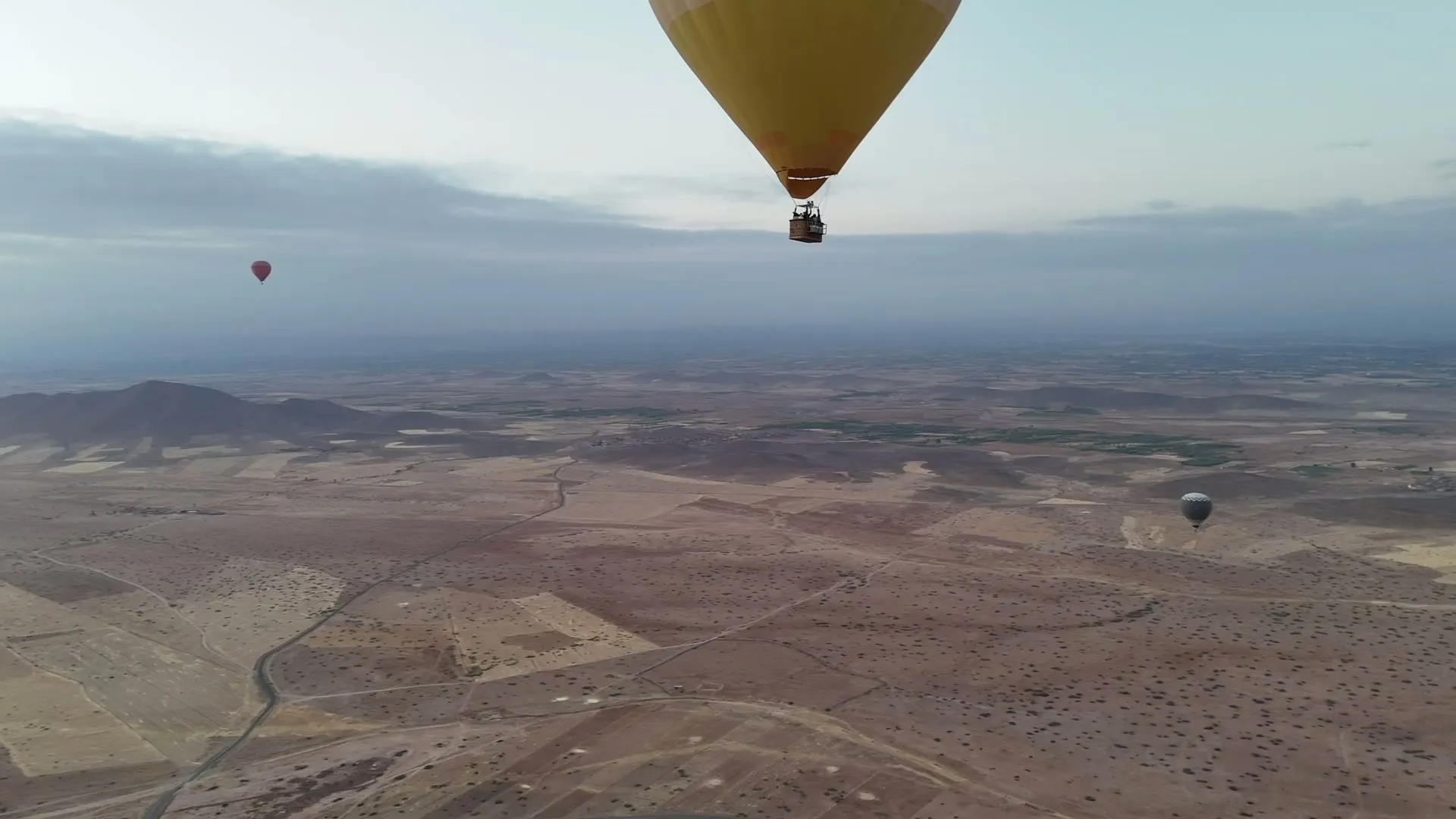
Planning aerial footage for a wedding, hotel or villa
Aerial views are part of most of our hotel, villa and destination films. This is how we plan them:
- Check the location first. Some venues sit close to the airport or to restricted sites, where a flight will not be possible whatever the paperwork.
- Request the authorisation for the exact place and date, as part of pre-production, well before the shoot.
- Plan the flight around the light and the wind. Early morning and the last hour before sunset give the best images and usually the calmest air.
- Fly only when it is safe, never over guests or crowds, and always with the venue’s agreement.
- Have a plan B. If permission is not granted or the wind is too strong, we agree on an alternative together: high angles from terraces and rooftops, wide shots from a hill or a balloon, or moving camera shots on a gimbal.
Questions to ask before you book aerial footage
- Do you have, or will you request, authorisation for this place and this date?
- Who flies the drone, and are they insured?
- What happens if the flight is not allowed or cancelled because of the weather?
- Will the drone footage be edited into the film or delivered separately?
A clear answer to each one is a good sign. “Don’t worry, nobody checks” is not.
Alternatives for travellers
If you wanted a drone for holiday photos, there are good ways to get the same feeling legally:
- A hot-air balloon flight at sunrise gives you real aerial views of the plains and the Atlas. See our guide to a hot-air balloon proposal in Marrakech.
- Rooftop terraces in the medina offer beautiful high views over the city and the Koutoubia.
- The hills of the Agafay desert give wide views over the plateau. Read our Agafay desert guide.
Frequently asked questions
Can I fly a drone in Marrakech as a tourist? No. Visitors cannot bring a drone into Morocco for personal use, and flying requires prior authorisation from the authorities.
What about a mini drone under 250 g? There is no confirmed exemption for small drones in Morocco. They are treated like any other drone at customs.
Will I get my drone back when I leave? Possibly, but it is not guaranteed. Customs can confiscate it and impose a fine. Leave it at home.
Can you film our wedding or our hotel with a drone? Yes, where the location allows it. We plan the authorisation in pre-production and agree on an alternative with you if a flight is not possible.
Want aerial views of your hotel, villa, wedding or campaign? We include the drone in pre-production, from the location check to the authorisation, so the shoot day runs smoothly. See our real estate films and hotel and riad films, or ask us for a free quote.