A Moroccan wedding is not one ceremony but a series of celebrations, sometimes spread over several days, with music, ululations, several dresses and a party that can last until dawn. For a couple planning a wedding in Marrakech, and for anyone attending their first, it helps to know what happens, when, and why.
There is no single script. Customs vary between Fez, Rabat, Marrakech, the north, Amazigh and Sahrawi families, and every family adapts them. What follows is the most common sequence, and how we photograph and film each moment.
A Moroccan wedding at a glance
| Moment | When | What happens |
|---|---|---|
| Marriage contract | Often weeks or months before | The legal and religious marriage, before the adouls |
| Hammam | A few days before | The bride’s purification ritual with the women of the family |
| Henna night | One or two nights before | Henna designs on the bride’s hands and feet |
| The wedding night (l’ʿars) | The main evening | Gifts, entrances, outfit changes, the amariya, dancing until dawn |
| The next day | After the wedding | A quieter family gathering, or simply rest |
The marriage contract
The marriage itself is the contract, signed before two adouls, the notaries who register marriages in Morocco. It records the couple’s agreement and the sadaq, the bride’s dower. Many families sign it well before the big party, so by the time the guests arrive, the couple is often already married.
This is usually a small, family moment, at home or at the adouls’ office. If it matters to you, ask for it to be photographed: it is one of the few calm, intimate scenes of the whole celebration.
The hammam
A few days before the wedding, the bride goes to the hammam with her mother, sisters, aunts and friends: black soap, ghassoul clay, rose water, songs and sweets. It marks her purification and her passage into married life.
The hammam itself is private and not photographed. The before and after, with the women of the family getting ready together, can make beautiful, gentle portraits.
The henna night
The henna night (laylat l-henna) usually takes place one or two nights before the wedding. A henna artist, the nekkacha or hennaya, draws fine designs on the bride’s hands and feet, symbols of good fortune, protection and fertility. The bride traditionally wears green, often with gold.
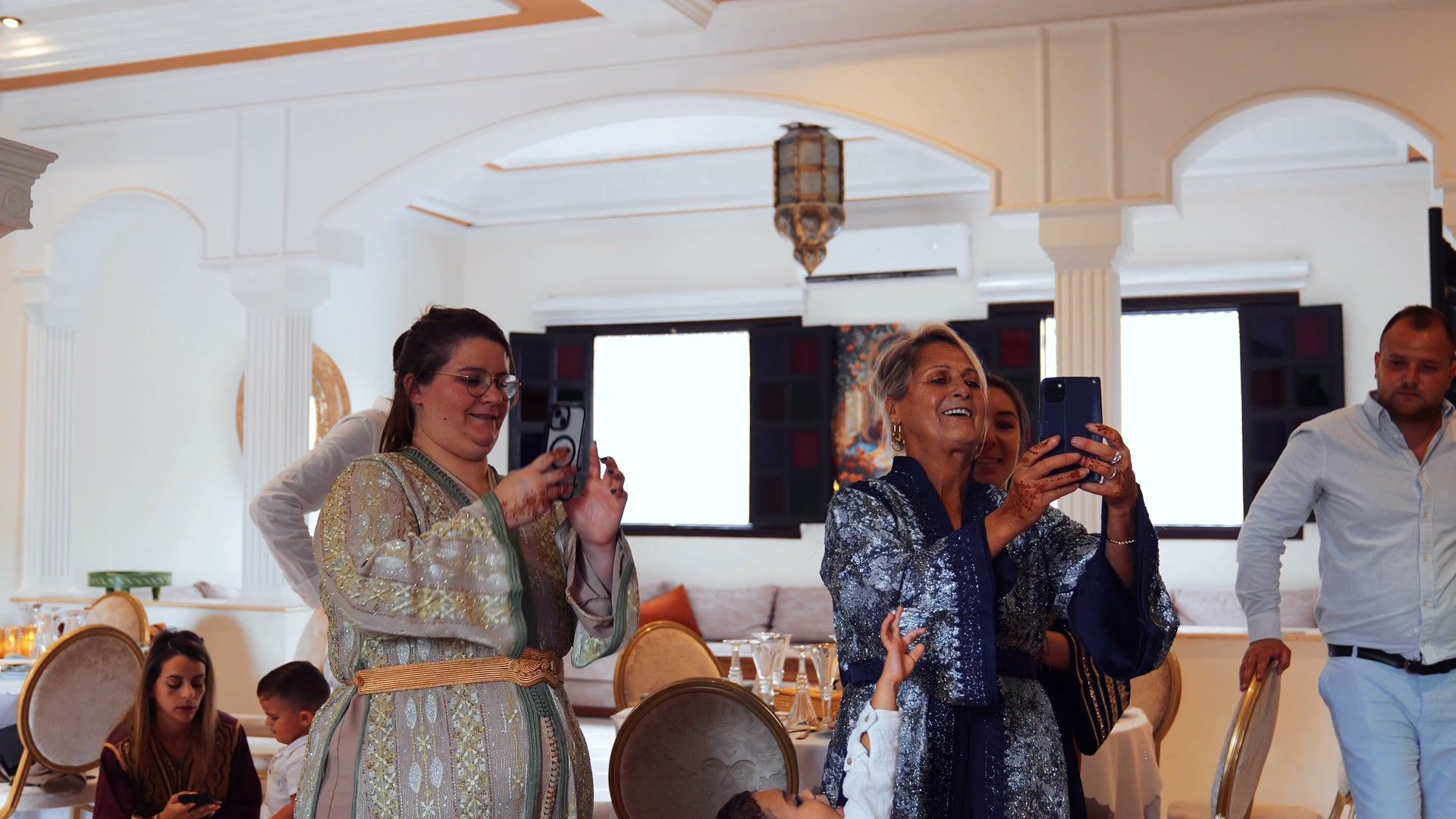
It used to be an evening for women only. Today many families invite everyone, and the groom sometimes receives a small touch of henna too.
For photos: the henna night is smaller and slower than the wedding, which makes it ideal for close-up details (hands, jewellery, the henna paste) and relaxed family portraits. If part of the evening is for women only, discuss with your photographer beforehand how it should be covered.
The negafa: the bride’s guide for the night
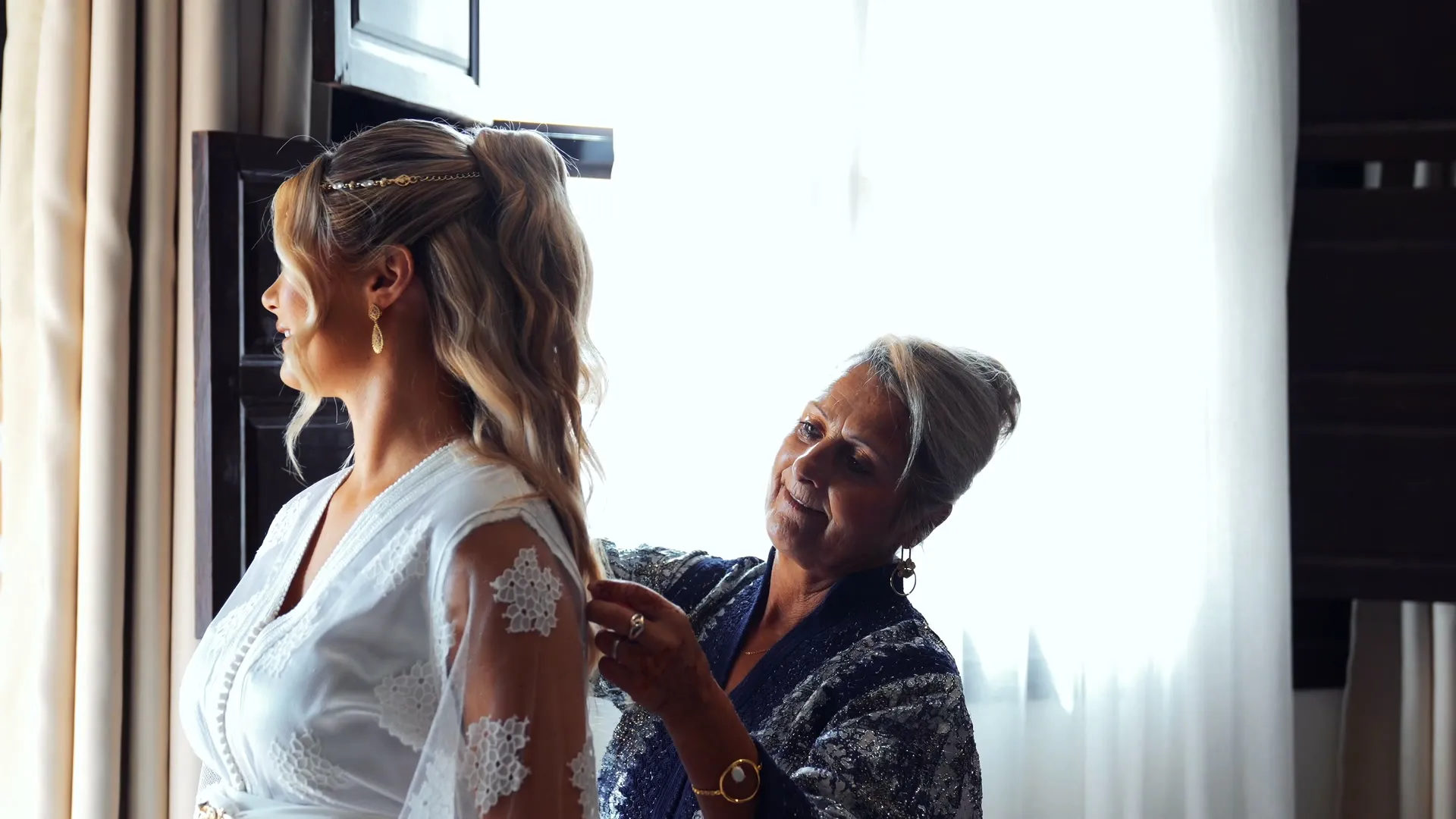
The negafa is one of the most important people at a Moroccan wedding. She is the bride’s dresser, stylist and master of ceremonies. With her assistants she:
- provides or arranges the outfits, the crowns, the jewellery and the wide embroidered belt (mdamma);
- dresses and re-dresses the bride between each appearance;
- times the entrances, the amariya and the moments on the mida, the decorated seat where the couple sits to receive guests.
For a photographer, the negafa is the key contact. She knows when the bride will reappear, in which outfit and through which door. We always introduce ourselves to her at the start of the evening and agree on the timing together.
The caftans and the outfit changes
A Moroccan bride changes outfits several times during the night. The traditional number is seven, each representing a region or a style, but three or four changes are common at weddings today.
- The caftan is a single long robe; the takchita is made of two layers, an underdress and an overdress, cinched with a belt. People often use the two words loosely.
- Regional outfits may include the Fassia from Fez, with its structured silhouette and rich jewellery, Amazigh dress with silver jewellery and woven belts, the Sahrawi melhfa, and the styles of Rabat (Rbatia) or the north (Chamalia).
- Many brides finish with a white gown.
For photos: each outfit is a new set of portraits. We plan a few quiet minutes with the couple after each change, away from the crowd, so every look is captured properly, not only from the dance floor.
The gifts and the welcome
The dfou’ is the procession of the groom’s gifts to the bride and her family: decorated trays carrying sugar cones, henna, milk, dates, fabrics, perfume, jewellery or sweets, often carried in with music. Sugar, milk and dates stand for sweetness, abundance and a happy life together, and dates and milk are also how Moroccan families traditionally welcome guests.
The amariya and the long night
The amariya is a richly decorated palanquin on which the bride, and often the groom, is lifted onto the shoulders of bearers and carried around the room, to drums, ululations and dancing. It is the most spectacular moment of the night and happens quickly, sometimes several times.
The wedding night itself usually starts late in the evening and can go on until dawn: guests arriving, the couple’s entrances, dinner, outfit changes, the amariya, then dancing. In Marrakech you will often hear the dakka marrakchia, a percussion music typical of the city, as well as chaabi, an orchestra or a DJ.
For film and photos: an amariya lasts only a few minutes. We place one camera high to capture the bride above the crowd and another close to the bearers, and we light the room without killing its atmosphere. A wedding that ends at 4 a.m. also means the team must be booked until the end, not only for “the evening”.
Mixed and destination weddings
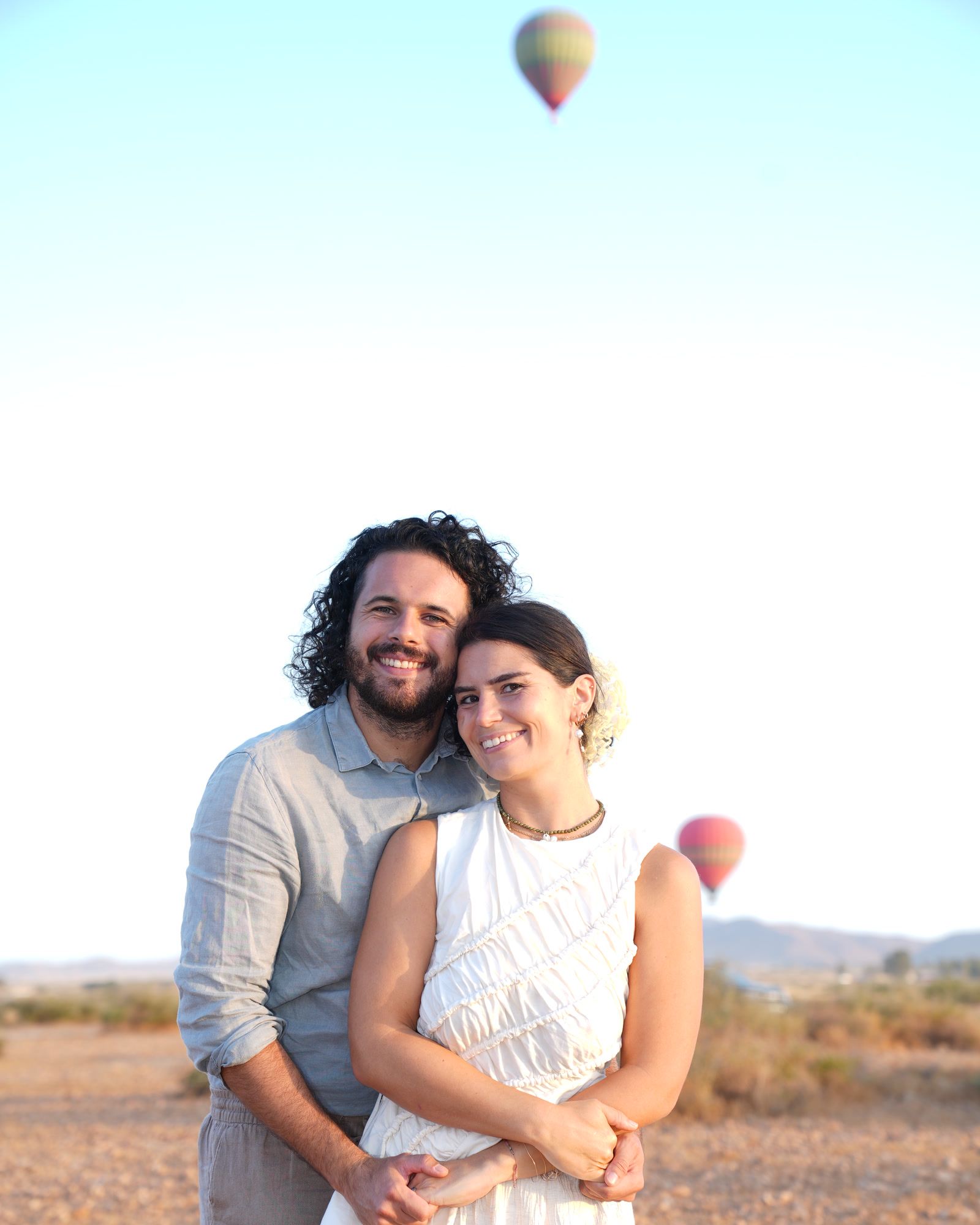
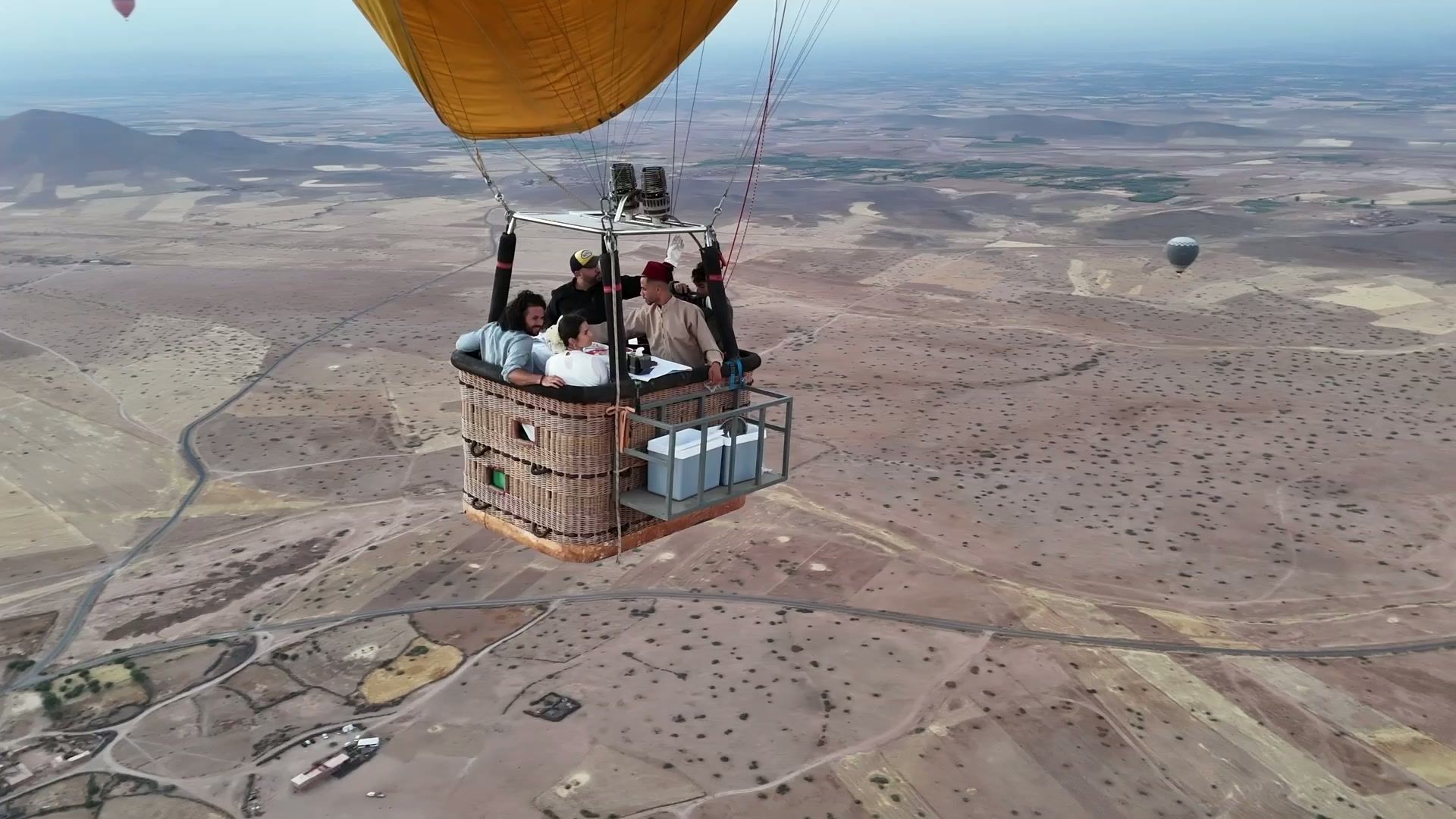
Many couples marrying in Marrakech mix traditions: a henna night the evening before, a riad dinner, one or two caftans and an amariya entrance, then a Western-style party. Foreign couples often love including these moments, and Moroccan families are usually delighted to share them. There is no wrong way, as long as the family is involved in the choices.
Frequently asked questions
How long does a Moroccan wedding last? Traditionally several days, from the hammam to the day after. Today many couples hold the henna night and the wedding on two consecutive evenings.
How many dresses does a Moroccan bride wear? Traditionally seven, but three or four outfit changes are common at weddings today.
What should guests wear? Women often wear a caftan or an elegant long dress; men wear a suit, or a djellaba or jabador for a traditional touch. Plan for a late night.
Do we need a negafa for a destination wedding? If you want caftans, jewellery and an amariya, yes: she makes those moments possible and keeps the evening on time.
Planning a Moroccan or mixed wedding in Marrakech? We photograph and film the henna night, the wedding and every outfit, working hand in hand with your negafa and planner. See our wedding photography and film, read what a wedding photographer costs in Marrakech, or ask us for a free quote.